Uganda | Mubuku | SL-14 | Anaerobic Natural
Region: Kasese, Western Uganda
Elevation:
1300-2030 masl
About: Set along the banks of the Mubuku River in western Uganda’s Kasese District, Mubuku Washing Station sits beneath the Rwenzori Mountains near the borders of both Queen Elizabeth and Rwenzori National Parks. More than 4,300 smallholder farmers contribute cherries to the station, with many farms spread across the fertile eastern slopes of the mountain range. Producers primarily cultivate SL14, often intercropped with bananas, vanilla, and beans as part of diversified farming systems.
This lot forms part of a quality-focused initiative led by UGACOF, aimed at advancing specialty coffee production in western Uganda through infrastructure development, processing innovation, and producer support. The region’s warmer and drier climate has proven particularly suited to anaerobic natural processing.
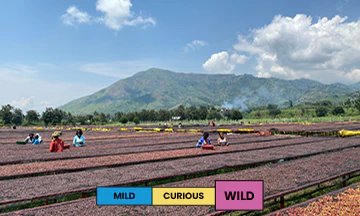
After harvest, cherries are floated, hand sorted, and sealed in fermentation tanks for 40 hours before being transferred to raised beds for drying. Over 18 to 24 days, dedicated drying teams carefully turn and sort the cherries to ensure even drying and maintain quality throughout the process.
Original: $19.99
-65%$19.99
$7.00Product Information
Product Information
Shipping & Returns
Shipping & Returns
Description
Region: Kasese, Western Uganda
Elevation:
1300-2030 masl
About: Set along the banks of the Mubuku River in western Uganda’s Kasese District, Mubuku Washing Station sits beneath the Rwenzori Mountains near the borders of both Queen Elizabeth and Rwenzori National Parks. More than 4,300 smallholder farmers contribute cherries to the station, with many farms spread across the fertile eastern slopes of the mountain range. Producers primarily cultivate SL14, often intercropped with bananas, vanilla, and beans as part of diversified farming systems.
This lot forms part of a quality-focused initiative led by UGACOF, aimed at advancing specialty coffee production in western Uganda through infrastructure development, processing innovation, and producer support. The region’s warmer and drier climate has proven particularly suited to anaerobic natural processing.
After harvest, cherries are floated, hand sorted, and sealed in fermentation tanks for 40 hours before being transferred to raised beds for drying. Over 18 to 24 days, dedicated drying teams carefully turn and sort the cherries to ensure even drying and maintain quality throughout the process.